STREETWEAR · APPAREL
ToppaOnly: brand identity and a Shopify storefront
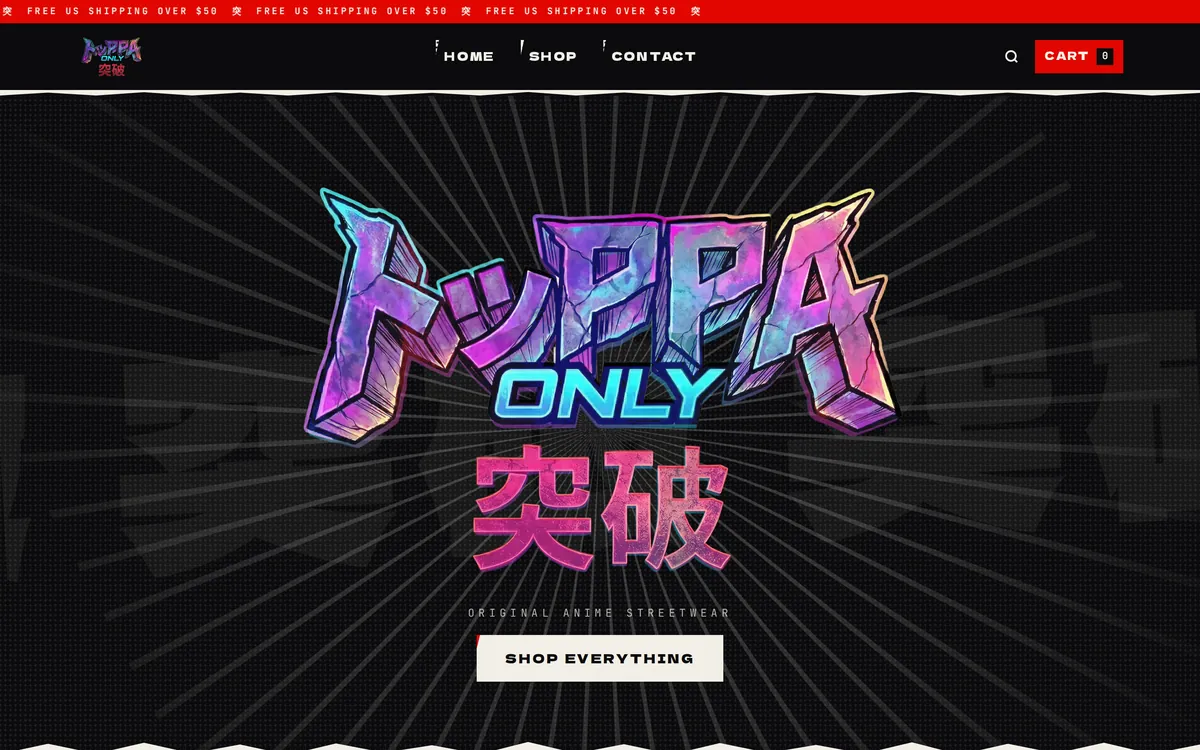
A streetwear label. Logo and brand identity first, then the storefront rebuilt on Shopify with an original-IP direction, so the catalogue stops depending on licences the brand does not hold. Social accounts set up alongside it.
A catalogue you do not own is a catalogue you can lose.
Streetwear built on somebody else’s characters sells. It just never becomes worth anything.
Apparel brands in this space almost all start the same way, printing the characters their customers already love. It works, because the affection is already there and the shirt is just a way to wear it. The problem is what it is built on: every one of those designs depends on a licence the brand does not hold, which is exposure sitting quietly under the whole catalogue.
The commercial problem is worse than the legal one
Set the licensing aside for a moment and the same arrangement still has a hole in it. When a customer buys a shirt because of the character on it, the affection they are paying for belongs to the character. They remember what was printed, not who printed it. Do that for years and the brand has thousands of sales and no equity — nothing anybody would follow to the next drop, because there was never anything to follow.
An original-IP direction inverts that. It is harder, because the brand now has to make people care rather than borrowing people who already do. But every sale after that point builds something the brand keeps.
Which is why the logo came first
A label cannot move to original work until there is a brand strong enough to carry it. If the mark is weak, taking away the licensed characters just leaves a plain shirt. So the identity was built before the catalogue direction changed and before the storefront was rebuilt: a logo and a brand the products could hang off, rather than a logo added to products that were already selling themselves.
The storefront was rebuilt on Shopify after that, around the brand rather than around a product grid, and the social accounts were opened on the same identity so that the store and the feed read as one label instead of two.
The mark, the store, and the direction underneath both.
Four pieces, built in an order that mattered.
The mark and the visual language around it — the thing that has to be strong enough for the products to belong to it rather than the other way round.
Rebuilt rather than reskinned, designed around the brand instead of around a default product grid.
A catalogue direction that does not depend on licences the brand does not hold, so what the label sells is what the label owns.
Set up alongside the store on the same identity, so the feed and the storefront are obviously the same business.
Why this order, and not any other.
Every step here exists because the one before it made it possible.
STEP 01
Build the mark first
A brand that can stand on its own is the precondition for everything after it. Without one, removing the licensed designs removes the reason anybody was buying.
STEP 02
Change what the catalogue is built on
Original work means the label owns what it sells, which removes the licensing exposure and starts putting the customer’s attention on the brand instead of on somebody else’s character.
STEP 03
Rebuild the storefront around it
A store designed around a brand sells the brand. A store that is a grid of products sells whichever product happens to be photographed best.
STEP 04
Open the social accounts on the same identity
The feed is where a streetwear label actually lives. Launching it on the finished identity means the first impression and the storefront agree.
Custom builds start at $2,500.
Brand identity is priced separately from the storefront it goes on.
Logo and identity work is its own project with its own number. Doing it first is usually cheaper than doing it after a store has been built around the wrong mark.
The services behind this build.
Every piece of it is something we do on its own as well.
— Start
Is your catalogue built on something you own?
If the answer is no, that is fixable, and it is easier before the brand gets big. Tell us what you are selling.